
You ask two shops to quote the same bracket. One number surprises you in a good way. The other is nearly double. The obvious conclusion is that one shop is overcharging.
Sometimes that’s true. More often the two quotes aren’t describing the same job. One assumed a common material and the other priced a specific grade. One treated every tolerance on the drawing as real. One included inspection and finishing, and the other left them out. The price gap is usually a gap in assumptions.
Understanding the custom machining cost factors behind a quote makes the numbers easier to read and shows you where cost can come down and where cutting corners costs you later.
This guide covers what drives price and how to compare quotes fairly. If you’re preparing a request, see what to include in your request. This article is about reading the answer.
The Short Version: What Drives Custom Part Machining Cost
| Factor | Why it affects price |
| Material | Stock cost, plus how hard it is to cut |
| Size and complexity | More operations, setups, and time per part |
| Tolerances and finish | Slower cuts, more measuring, extra steps |
| Setup and labor | Fixed preparation work, whatever the order size |
| Quantity | Setup spreads across pieces; material and run time add up |
| Inspection and finishing | Verification and extra operations take time |
| Delivery timing | Rush work disrupts the schedule |
| Condition of the original (repairs) | Scope depends on what inspection finds |
Machining Labor Costs: Why Setup Is the Biggest Surprise
Machining labor costs cover more than cutting time. They include reviewing the drawing, planning the sequence, preparing tooling, holding the part, setting up the machine, running the job, and verifying the result.
Setup is a fixed amount of work that doesn’t shrink because the order is small. One part carries the whole setup. Ten parts share it. That’s why a single piece can look expensive per part while a small batch looks noticeably cheaper.
It isn’t always neat. Parts needing several setups, special fixtures, or piece-by-piece inspection don’t gain the same per-part savings as simple ones. Material and run time also still scale with quantity, so total cost rises even as the per-part number falls.
The Other Price Drivers, in Brief
Material
It affects machining service cost twice: what the stock costs, and how hard it is to cut. A hard-to-machine grade wears tools faster and runs slower. A part cut from a large block can also need far more raw material than the finished size suggests.
Size and complexity
Size alone doesn’t set the price. A small part with deep holes and tight relationships between surfaces can cost more than a large, simple one, because complexity shows up as operations and time.
Tolerances and finish
Tighter limits mean slower finishing cuts and more measurement. Cost climbs when tight tolerances are applied everywhere instead of only where the part’s function needs them.
Inspection and finishing
Deburring, cleaning, surface finishing, dimensional inspection, and material certification all take time. This is where quotes diverge most, because one shop may include them and another may not.
Delivery timing
A tight date can mean reshuffled schedules or faster material sourcing. A rush doesn’t always carry a surcharge, but not every job can be done in any timeframe.
Repair Jobs: Why the Price Depends on What We Find
Repair work follows different logic from making a new part from a drawing. The starting point is an existing component, and its condition isn’t fully known until it’s cleaned and inspected.
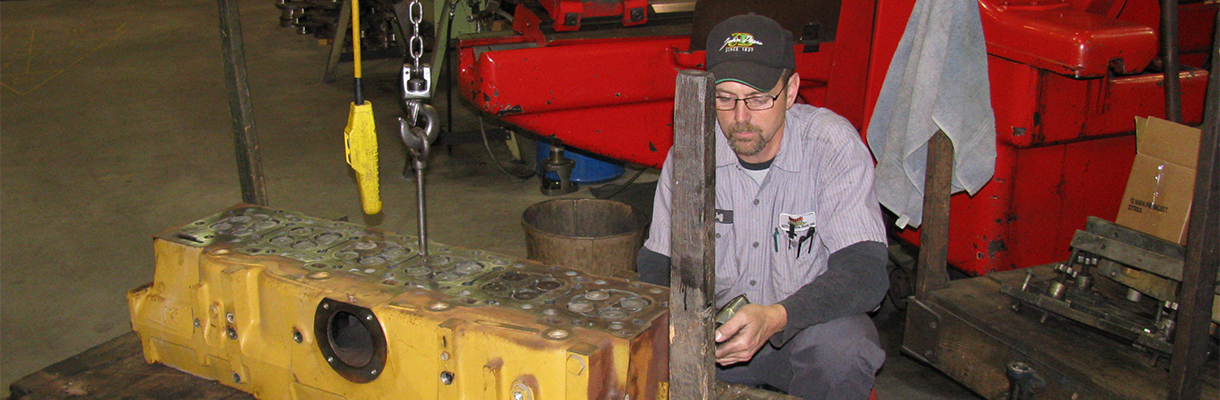
At Rutt’s Machine, a lot of our work is engine and industrial repair, so we see this daily. A block, crankshaft, or head may need cleaning and inspection before anyone can say what it needs. The scope can range from light machining to major rebuilding, such as block rebuilding, or to the conclusion that a part isn’t worth repairing.
If you’re comparing repair quotes, ask what could change the scope and how changes get communicated before extra work is done. A clear answer to those matters more than a low starting number. If the equipment can’t be moved, our mobile machining service may change the timeline and cost picture, depending on the job.
How to Compare Machine Shop Pricing Factors Fairly
Put the quotes side by side and check:
- Material: same grade, same stock?
- Quantity: prices for the same number of parts?
- Tolerances and finish: same requirements priced?
- Operations: same cutting, finishing, and cleaning included?
- Inspection and documentation: what’s verified, and what do you receive?
- Delivery: what date is committed, and what is it contingent on?
- Exclusions: what isn’t covered, and what could change the price?
A lower quote isn’t a lower cost if it leaves out required work, because the gap often comes back as change orders or rework. A higher quote isn’t automatically better either. Ask what the extra covers.
Where You Can Reduce Cost Without Hurting the Part
- Loosen non-critical tolerances and keep tight limits where function needs them.
- Allow a suitable alternative material where the application permits it.
- Simplify features that don’t affect function, after discussing them with the shop.
None of these is a trick. They make sure you pay for what the part needs.
Get a Quote That Reflects the Real Job
At Rutt’s Machine, we’d rather price the job you actually have than a rough guess. If you’re ready to ask, contact us.
FAQs
Why is a single custom part so much more expensive per piece than a small batch?
Setup and preparation are mostly fixed costs. One part carries all of them, and a batch shares them. Material and run time still scale with quantity.
Does a rush job always cost more?
Not always. It depends on workload, material availability, and the job’s complexity. Ask what’s possible and be clear about whether the deadline is firm.
Can I get a fixed price for a repair?
Sometimes, but the scope often depends on what inspection shows. Ask how scope changes are handled before work begins.
Is cheaper material always cheaper overall?
No. A lower-cost material can be harder to machine or may not hold up in service, which can offset the savings.
Do tighter tolerances always cost more?
Generally they add work, but how much depends on the feature, material, and process. The useful question is whether tolerance is necessary for the part’s function.
Why do two shops quote different lead times for the same part?
Workload, material availability, processes, and scope can all differ. Compare what’s included along with the date.