A failed engine part does not always reveal the original cause of the problem. Wear, cracks, heat, lubrication issues, incorrect clearances or trouble elsewhere in the engine can contribute to component failure. Inspecting the damaged part along with related components can help identify what happened before another repair is made.
When an engine part breaks, attention naturally goes straight to the broken part. A gasket blows. A bearing is damaged. A crankshaft shows wear. Something has failed, and getting the equipment back into service becomes the priority.
But replacing that part doesn’t automatically answer the bigger question: why did it fail in the first place?
At Rutt’s Machine Shop Inc., we work with engines and components that have already reached that point. Sometimes the damaged part is the problem. Other times, it’s the place where a problem somewhere else finally showed itself.
That’s an important distinction when looking at engine part failure causes. The visible failure may tell us where to begin looking but it doesn’t necessarily tell us where the investigation should end.
The Broken Part Gives Us a Starting Point
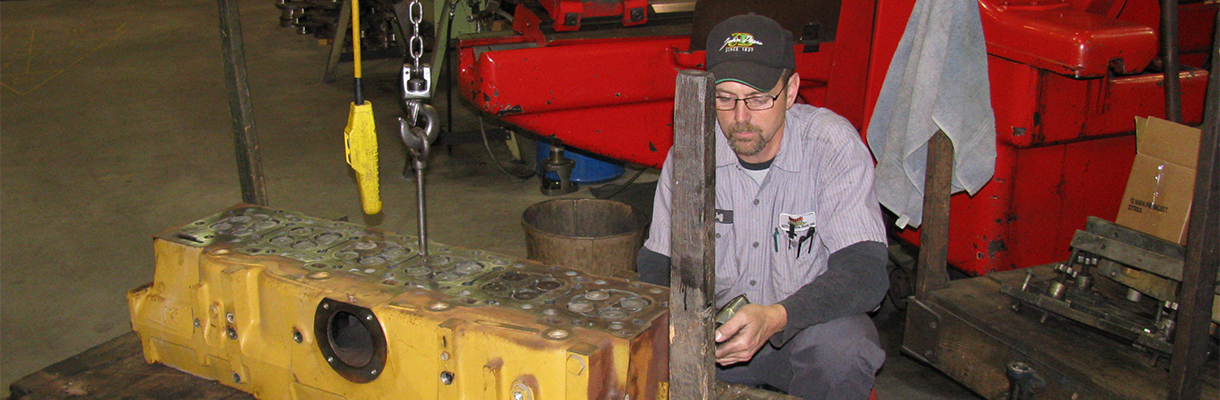
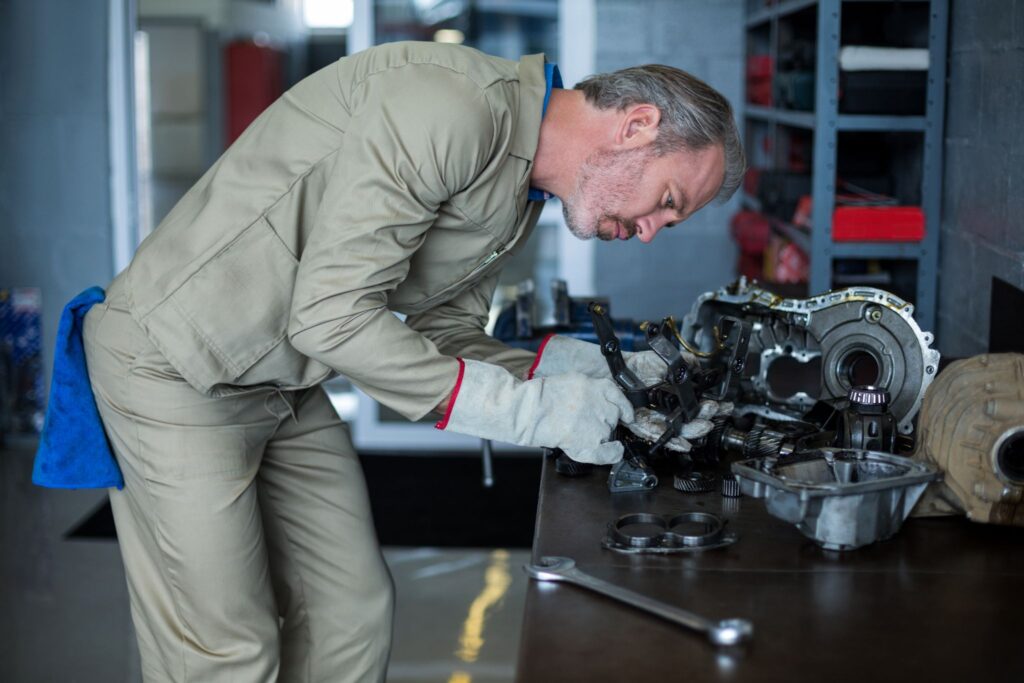
A failed component can leave behind useful clues. Cracks, unusual wear, damaged surfaces or other visible conditions may point us toward the next step. The surrounding components can matter just as much. An engine is a group of parts working together, so one condition can affect another over time.
At Rutt’s, our work includes engine rebuilding, crankshaft rebuilding, cylinder block reconditioning, connecting rod rebuilding, oil pump rebuilding and Magnaflux testing. Those services involve inspecting components and determining their condition before deciding what repair or machining work may be needed.
That inspection matters because replacing a damaged component without understanding what contributed to the failure can leave the original issue untouched. And if that happens, the replacement part may eventually end up in the same condition.
Engine Part Failure Causes Can Start Somewhere Else
The cause and the failure aren’t always in the same place. A component may fail because of its own condition. Wear may have progressed over time. A crack may have developed. But other conditions within the engine can also contribute to what eventually happens to a particular part.
That’s why engine part failure causes can require more than a quick look at the component that came out damaged.
During crankshaft rebuilding, for example, Rutt’s inspects crankshafts for cracks, straightness, journal sizes, thrust end play and hardness. Connecting rods are inspected for conditions including cracks, bearing bore condition, alignment and pin clearance.
Use up and down arrow keys to resize the meta box pane.
Those checks are not all looking for the same problem. They help build a clearer picture of the condition of the component. The part may have failed in one location, but the information we need may be sitting somewhere else in the engine.
A Repeated Failure Should Raise a Different Question
One failed part can be straightforward. The same part failing again is a different situation.
At that point, replacing it one more time may not be the best place to stop and think. Something may be contributing to the repeated failure and that condition needs attention too.
Rutt’s Mobile In-Place Machining work includes an example involving repeatedly blown gaskets. Replacing the gaskets did not solve the underlying problem because the issue was elsewhere in the engine. Addressing the condition of the engine block was necessary to correct the problem behind the repeated gasket failures.
That example gets to the heart of engine part failure causes. The gasket was the part that failed. It wasn’t necessarily the part that caused the failure.
Wear and Cracks Are Only Part of the Picture
Not every engine problem announces itself the same way. Some components wear gradually. Others may crack. A surface may no longer be in suitable condition or dimensions may have changed enough to affect how parts work together.
That is why rebuilding an engine is not simply a matter of replacing every part that looks old.
At Rutt’s, cylinder blocks are cleaned and inspected for casting flaws and cracks before machining work is determined by the condition of the block. Depending on what inspection reveals, work may involve boring and honing cylinders, installing repair sleeves, resurfacing, remachining counterbores or repairing bearing bores and thrust surfaces.
The point is not that every damaged engine needs all of that work. Quite the opposite. The condition of the engine determines what needs to happen next.
Sometimes the Engine Isn’t the Only Suspect
An engine can run poorly or show symptoms that make an internal problem seem like the obvious explanation. That isn’t always the case.
Rutt’s notes that some engines brought in for investigation have problems related to electrical, fuel or after-treatment systems rather than an internal engine failure. This is another reason diagnosis matters before major repair decisions are made.
A failed engine component can certainly point to an internal issue. But engine part failure causes are not something we should assume before the relevant parts and systems have been evaluated. The goal is to find the actual problem, not simply the first problem we can see.
Inspection Can Change the Direction of the Repair
When equipment is down, there is usually pressure to get moving.
Nobody wants a truck, piece of agricultural equipment, generator, or industrial machine sitting out of service longer than necessary. But replacing parts without enough information can create another problem: doing the same repair twice.
Rutt’s provides component inspection and repair work for gas and diesel engines, along with custom machining and complete engine rebuilding. Our capabilities include Magnaflux testing, crankshaft work, cylinder block reconditioning, connecting rod rebuilding, and other engine-related services.
Each job does not follow the same path.
Sometimes inspection confirms that a component needs replacement or repair. Sometimes machining is needed. Sometimes the problem leads outside the engine itself.
That is why the failed part should be treated as information, not automatically as the final answer.
Before Replacing the Part, Look at What Happened Around It
A failed component tells us something. The question is whether it tells us the whole story.
For engine part failure causes, it helps to look at the condition of the failed part, the related components, and the engine or system around them. That may reveal wear, cracks, alignment issues, dimensional changes or another condition that deserves attention.
At Rutt’s Machine Shop Inc., we provide engine repair, rebuilding, component inspection, precision machining and mobile machining services. We work with gas and diesel engines used across industries including agriculture, construction, trucking, mining, manufacturing, power generation and marine applications.
The broken part is where the conversation starts. Finding out why it failed is what helps determine where the repair should go next.
FAQs
What are common engine part failure causes?
Engine components can fail because of wear, cracks, heat, lubrication-related issues, incorrect clearances, alignment problems or other conditions affecting the engine. The specific cause depends on the component and the overall condition of the engine.
Can a failed engine part be a symptom of another problem?
Yes. A damaged component may be where the problem becomes visible rather than where it began. Inspecting related parts and the engine’s condition can help identify contributing issues.
Why might the same engine part fail repeatedly?
Repeated failure can indicate that an underlying condition has not been addressed. The part itself may need replacement but another component, surface, clearance or engine condition may also require attention.
Can engine parts be checked for cracks?
Yes. Rutt’s Machine Shop provides Magnaflux testing and performs crack inspection as part of applicable component rebuilding and repair work.
Does a rough-running engine always have an internal problem?
No. Some problems that appear to involve the engine may be related to electrical, fuel, or after-treatment systems instead. Evaluating the actual issue can help determine where the problem is coming from.
Use up and down arrow keys to resize the meta box pane.